


Adhesive and Pressure-Sensitive Adhesive Design with Multiscale Simulation


Structural adhesion and pressure-sensitive adhesion are not easy to understand or design because interfacial interactions, internal material structure, peel rate, and temperature can all influence performance at the same time. This article organizes these factors from the perspective of simulation and discusses how computational methods can contribute to materials design.
1. Why Adhesion Is Difficult to Understand—and Where Simulation Can Help
Adhesives and pressure-sensitive adhesives (PSAs) are used with a wide range of substrates, including metals, glass, and polymers, and their performance is often critical to product reliability. Understanding why an adhesive bonds well—or why it eventually separates—can nevertheless become complicated because several phenomena act simultaneously. At the interface, adsorption, intermolecular forces, chemical bonding, interdiffusion, and mechanical interlocking may all contribute. Within the adhesive layer, polymer-chain entanglement, crosslinking, fillers, and rubber-particle microstructures can influence the mechanical response. Peel rate and temperature can further change the viscoelastic response and even the mode of failure.
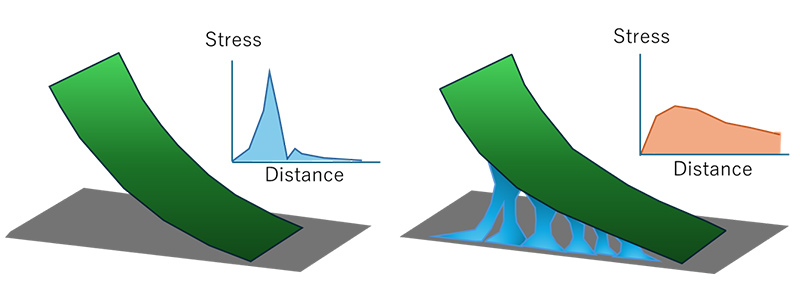
Figure1. Differences in debonding behavior between an adhesive (left) and a pressure-sensitive adhesive (PSA) (right)
For systems involving phenomena over multiple length and time scales, it can be difficult to isolate individual contributions experimentally. Multiscale simulation provides a framework for separating the problem into different scales, modeling each phenomenon with an appropriate method, and connecting the scales where necessary.
In the following sections, we consider several questions that commonly arise in adhesive and PSA design and examine which scale of simulation can provide useful information for each.
2. Peel Stress and Energy
When evaluating adhesive strength, a high peak peel stress or maximum load does not necessarily mean that a correspondingly large amount of energy is required to complete separation. A molecular dynamics study of polyimide adhesion to silica glass examined several modes of interfacial separation [1]. The simulations showed a clear trade-off associated with molecular rigidity. The rigid aromatic polyimide resisted detachment more strongly but completed separation over a relatively short displacement. The more flexible aliphatic polyimide required a lower maximum force but could undergo more deformation before complete detachment.
In simplified terms:
- Aromatic polyimide is relatively rigid. Because the chains undergo less conformational change during separation, a relatively large peak load can arise, while the displacement required for complete detachment remains comparatively small.
- Aliphatic polyimide is more flexible. Chains near the interface can stretch and rearrange to a greater extent, so the maximum load can be smaller even though separation continues over a larger displacement.
A molecular dynamics study of PSAs has also investigated the effects of molecular weight and substrate surface roughness [2]. The reported peel energy increased as molecular weight and surface roughness increased. In contrast, the peak peel stress could not be described by molecular weight alone. The arrangement of chain segments constrained by the substrate and the connectivity of these segments through the crosslinked molecular network also affected the peak stress.
Thus, even when two materials are both described simply as having “strong adhesion,” the relevant design strategy may differ depending on whether the target property is peak peel stress or the total energy required for separation, i.e., toughness. Simulation can help distinguish these contributions by allowing force–displacement or stress–displacement behavior to be examined together with the molecular-scale motion and deformation of polymer chains.
3. Surface Treatment
Primers and coupling agents are often used to improve adhesion by modifying the interface between a substrate and an adhesive. In many cases, these molecules are designed to interact with both an inorganic surface and an organic material, thereby improving the transfer of load across the interface.
A study of interfacial reinforcement in glass-fiber-reinforced polypropylene (GFPP), which also employed molecular dynamics simulation, proposed a molecular-level explanation for the improvement in interfacial shear strength [3]. In the model, maleic-anhydride-modified polypropylene (MAH-PP) formed covalent connections with molecules in the surface-treatment layer on the glass fiber. The surface-associated MAH-PP also became strongly entangled with the surrounding polypropylene matrix. During shear deformation, these entanglements restricted molecular-chain motion, which was proposed as an important contribution to the increase in interfacial strength.
From a design perspective, it is useful to separate at least two effects:
(i) chemical bonding between functional groups and the substrate surface, and
(ii) the organization, entanglement, and constraint of polymer chains near the interface.
Considering these effects independently makes it easier to treat surface treatment as a controllable materials-design variable. First-principles calculations can also be used to investigate adhesion between molecules and surfaces, including interactions between polymers and metal surfaces [4].
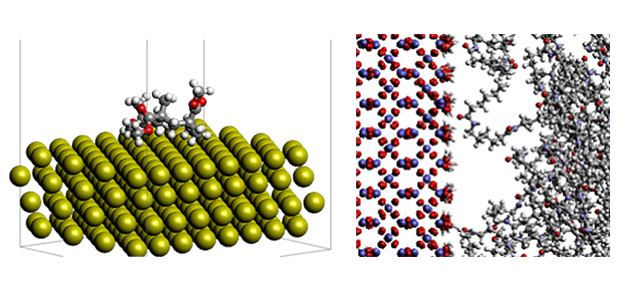
Figure2. Example of molecular-scale adsorption calculations on a substrate
4. Relationship Between Viscoelasticity and Peel Rate
The behavior of PSAs and rubber-based adhesives can change substantially with peel rate and temperature. This can be understood in terms of the relationship between the relaxation times of the polymer and the timescale imposed by the test or application conditions.
Viscoelastic simulations based on concepts such as reptation theory and slip-link models can be used to estimate the frequency dependence of the storage modulus G′ and loss modulus G″ at different temperatures. These results make it possible to examine whether a material behaves predominantly elastically or exhibits substantial energy dissipation within the frequency range corresponding to the relevant deformation timescale.
From a design standpoint, one possible workflow is to identify the timescale or frequency range associated with the intended peel conditions, examine the balance between elastic response and energy dissipation in that range, and then consider how parameters such as crosslink density should be adjusted.
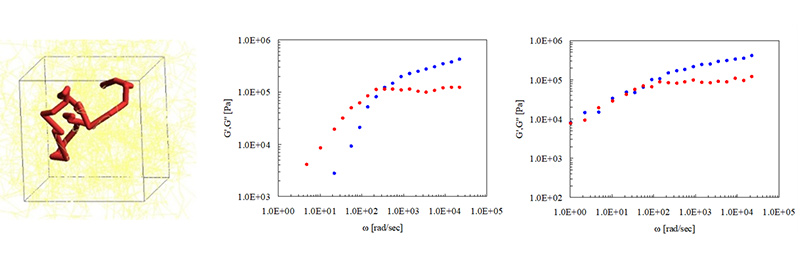
Figure3. Simulation example for the dynamics of entangled polymers
Left: polymer chains represented using a tube model
Center: viscoelastic master curve
Right: change in the viscoelastic master curve caused by crosslinking
5. Microstructure: Rubber Particles and Phase Separation
Adding a rubber component to an adhesive to improve toughness is a well-established strategy. However, optimizing particle size, concentration, morphology, and spatial distribution is not straightforward.
One possible multiscale approach combines mesoscale simulation of phase separation or particle dispersion with micromechanical analysis using a representative volume element (RVE) to investigate relationships between microstructure and mechanical response [5,6].
This type of analysis is technically demanding, but the overall workflow can be described as follows. Mesoscale methods such as self-consistent field theory (SCFT) or dissipative particle dynamics (DPD) are first used to predict characteristics such as phase-separated morphology, interfacial thickness, and particle arrangement. The resulting microstructure is then transferred to an RVE model for mechanical analysis under deformation. Where appropriate, the resulting effective behavior can subsequently be incorporated into a larger-scale structural analysis.
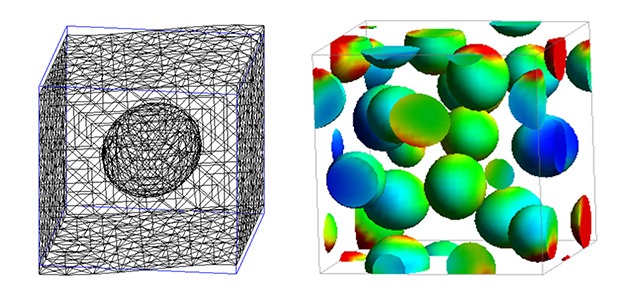
Figure4. Micromechanical analysis of phase-separated microstructures
Left: a single-domain structure and its mesh after shear deformation
Right: stress distribution under shear deformation in a structure containing multiple domains
6. A Practical Way to Begin
In practical materials development, it is generally best to start with the scale most directly related to the phenomenon of interest.
For example, first-principles calculations combined with molecular dynamics can be used when the main questions concern functional groups or adsorption energies. Coarse-grained molecular dynamics combined with structural analysis may be appropriate when the primary interest is the debonding behavior of an adhesive layer. For phenomena involving much longer timescales, viscoelastic models may provide a more practical description.
Adhesive and PSA design is challenging because interfaces, internal material structures, and application conditions interact with one another. Multiscale simulation can help decompose this complexity and clarify which physical factors are responsible for changes in specific performance metrics.
In an industrial development process, it is not always necessary to construct a fully integrated multiscale model from the beginning. Introducing simulation selectively where it can answer a specific design question can already help improve technical discussions and reduce unnecessary experimental iterations.
Another emerging approach is to accumulate simulation results together with experimental data and use materials informatics (MI) to learn relationships such as:
Formulation / molecular structure / surface-treatment conditions → peel properties
Simulation can provide physically interpretable descriptors for such models, including adsorption energies, molecular behavior near interfaces, and viscoelastic characteristics. These descriptors can make it easier to retain a physical interpretation of the resulting MI model rather than relying entirely on black-box correlations.
Combining multiscale simulation from quantum-level calculations through continuum analysis with data-science approaches requires coordination across several computational methods. An integrated environment such as J-OCTA can help organize these analyses into a more streamlined workflow. Please feel free to contact us if you are interested in applying these approaches to adhesive or pressure-sensitive adhesive development.
- K. Min, A. R. Rammohan, H. S. Lee et al., “Computational approaches for investigating interfacial adhesion phenomena of polyimide on silica glass,” Scientific Reports 7, 10475 (2017).
- Y. Iwakata, S. Izumi, “Effect of Molecular Weight of Pressure-sensitive Adhesive to Peeling Phenomenon between Adhesive and Silicon Wafer by Molecular Dynamics Simulations,” Journal of the Society of Materials Science, Japan 71(2), 143-150 (2022) [in Japanese].
- K. Hiramoto et al., “Analyzing Mechanism of Increasing Interfacial Strength in Glass Fiber Reinforced Polypropylene Using Molecular Dynamics,” Mazda Technical Review, No. 34, 145-150 (2017) [in Japanese].
- JSOL, “Molecular-Level Adhesion,” ASAP Analysis Example A013, JSOL CAE Solutions [in Japanese].
- JSOL, “J-OCTA Multiscale Simulation Software,” product information, JSOL CAE Solutions.
- JSOL Technical Blog, “Simulation of Polymeric Materials : Overview and Examples,” JSOL CAE Solutions [in Japanese].
More from This Category
Related Information
Categories
New articles
- Fine-Particle and Pigment Dispersion: The Role of Simulation
- Adhesive and Pressure-Sensitive Adhesive Design with Multiscale Simulation
- Simulation of Coating-Film Drying : A Practical Introduction to 1D/3D Analysis for Coating, Painting, and Electrode Processes
- Designing Plastic Recycling with Molecular Simulation
- What is Materials Informatics (MI)?
Next-generation materials development accelerated by AI × simulation
- Electrical conduction as a multiscale simulation
- Development of force fields used in molecular dynamics calculation
- What you need to know when using molecular modeling and simulation for materials design
- Materials & Process Informatics
- Machine Learning for Materials Design in J-OCTA - - Simulation of lithium-ion batteries
